
Optimizing Recovery from Regenerative Procedures
Evidence-based nutrition, lifestyle, and adjunct strategies to help your body heal after an injury or procedure.
A good procedure is only half of the equation — what you do afterward matters just as much. The guides below walk through the nutrition, lifestyle, and recovery habits research shows support faster, more complete healing. Read through the stages here, or grab the downloadable PDF for reference.
Nutrition for Healing
Click Here for Your Optimizing Recovery GuideYour body's ability to repair tissue, fight infection, and rebuild strength after an injury, surgery, or procedure depends heavily on the fuel and building blocks you give it. The suggestions below are drawn from clinical and nutrition research on wound and tissue healing. They are general guidance — talk with your physician or a registered dietitian before starting any new supplement, especially if you have kidney disease, liver disease, are on blood thinners, or are pregnant.
1. Protein — The Foundation of Repair
Protein supplies the amino acids your body uses to rebuild tissue, synthesize collagen, and support immune function. Needs rise substantially above baseline after injury or surgery.
- Healthy adults at baseline typically need about 0.8 g of protein per kg of body weight per day — this is not enough during active healing.
- During recovery from surgery or significant injury, most nutrition guidelines (including ESPEN and ERAS protocols) recommend roughly 1.2–2.0 g/kg/day, and wound-care guidelines commonly target 1.25–1.5 g/kg/day for patients with open wounds or pressure injuries.
- Example: a 70 kg (154 lb) person recovering from surgery might aim for roughly 85–140 g of protein per day, spread across meals rather than eaten all at once.
- Good sources: eggs, poultry, fish, lean meat, dairy or Greek yogurt, legumes, and, when intake is difficult, a whey or plant-based protein supplement.
2. Branched-Chain Amino Acids (BCAAs)
BCAAs — leucine, isoleucine, and valine — are essential amino acids that appear to help limit the loss of muscle mass that commonly occurs during immobilization or the metabolic stress of surgery, and leucine in particular helps stimulate muscle protein synthesis.
- A randomized study in older adults recovering from hip fracture surgery found BCAA supplementation was associated with better postoperative recovery of serum albumin, a marker of nutritional status.
- In patients recovering from tonsillectomy, BCAA supplementation helped preserve muscle mass and body composition during the recovery period, when eating is often reduced.
- Best thought of as supporting muscle preservation during recovery rather than a guaranteed way to speed wound closure — there is no single agreed post-surgical dose, so this is a reasonable discussion point with your care team.
- Typical over-the-counter dosing: 5–10 g per serving.
3. Vitamin C
A required cofactor for the enzymes that build and cross-link collagen, the structural protein that gives healing tissue its strength, and an antioxidant supporting immune cell function during the inflammatory phase of healing.
- A systematic review found supplementation associated with a substantially faster recovery process versus placebo.
- Improved healing shown in pressure ulcers and surgical wounds, particularly when baseline status is marginal — common after major surgery or trauma due to increased metabolic demand.
- Documented case reports show that even mild, subclinical vitamin C deficiency — more common in surgical patients than generally recognized — can measurably slow wound healing, and correcting it improves outcomes.
- Studies of therapeutic supplementation have used roughly 500–1,000 mg/day, well above the standard RDA of ~65–90 mg/day — discuss an appropriate dose with your physician.
4. A Daily Multivitamin/Mineral — and Key Micronutrients
Injury and surgery increase the body's turnover of several vitamins and minerals right when appetite and food intake often drop. A basic daily multivitamin/mineral supplement is a reasonable, low-risk way to cover gaps, and a few nutrients have specific evidence behind them:
- Zinc — a cofactor for collagen synthesis; deficiency is well documented to impair wound healing, and supplementation has been shown to speed re-epithelialization in zinc-depleted patients. Typical doses: 15–40 mg/day, time-limited and physician-guided, since very high or prolonged doses can impair copper absorption.
- Vitamin D — supports immune regulation and bone/muscle health; low status is common and linked to poorer musculoskeletal recovery, particularly after fracture or orthopedic surgery.
- Vitamin A — supports epithelial turnover and the early inflammatory phase; needed in modest amounts only, since it's fat-soluble and can accumulate.
5. Other Evidence-Based Nutrition Supports
- Omega-3 Fatty Acids — help modulate the inflammatory response; meta-analyses in surgical populations have found supplementation can reduce postoperative inflammation, support immune function, and shorten hospital stay in some surgical settings.
- Arginine and Glutamine — arginine increases collagen deposition at the wound site; glutamine supports immune cell proliferation during periods of physiologic stress. Often combined with vitamin C and zinc in “immunonutrition” formulas used before and after major surgery.
- Collagen Peptides — hydrolyzed collagen provides direct building blocks (glycine, proline, hydroxyproline) for new collagen; shown to improve wound healing and nutritional status in burn patients.
- Calories and Hydration — under-eating slows repair because the body burns protein for energy instead of tissue building. A common estimate is roughly 30–35 kcal/kg/day during active healing. Adequate fluid intake also supports nutrient delivery to healing tissue and helps prevent constipation from reduced activity and pain medications.
6. Creatine Monohydrate
One of the best-studied and safest sports-nutrition supplements available, with direct relevance during recovery — not just for athletes.
- Muscle preservation — helps limit the loss of muscle mass and strength during immobilization, casting, or reduced activity after injury or surgery, a period when disuse atrophy can happen quickly.
- Cognition — clinical trials show modest improvements in memory, attention, and processing speed, particularly under metabolic stress (poor sleep, aging, illness) — relevant since recovery itself often disrupts sleep and activity.
- Typical studied dose: 3–5 g/day; well-tolerated with a long safety record. Discuss with your physician if you have kidney disease.
7. Lion's Mane Mushroom
Popular as a cognitive-support supplement, though the evidence is genuinely preliminary — several small randomized trials with mixed results, considerably weaker than the evidence for creatine or vitamin C. Some small trials in older adults with mild cognitive complaints have shown improvement in standardized cognitive test scores over 8–12 weeks of daily use. Its safety profile is favorable, making it a reasonable, low-risk option to try, but not an evidence-backed recovery essential.
8. General Diet Pattern for Cognitive Health
Beyond specific supplements, a Mediterranean- or MIND-style diet — vegetables, fruit, fish, olive oil, nuts, and legumes, with limited red meat and processed food — has the best-supported evidence for cognitive health, and overlaps substantially with the healing-focused nutrition above. Omega-3s also have the most consistent supplement-level evidence for cognitive support, particularly attention and processing speed, and B vitamins (B12, folate, B6) show benefit primarily in those with mild cognitive impairment or a measured deficiency — worth checking levels rather than supplementing blindly.
9. If Your Treatment Involves a Blood Draw (PRP / BMAC)
Rebuilding blood cells draws on the same nutritional reserves — iron, protein, B12 — as tissue healing. A treatment that removes blood is asking your body to do two rebuilding jobs on one budget, not just one.
- Women and anyone having more than one treatment are most likely to benefit from iron support; a one-time ferritin check beforehand is the most precise way to decide.
- If supplementing empirically, a standard over-the-counter iron supplement daily for about 2–3 weeks after treatment is a reasonable, low-risk default, in line with blood-donor recovery protocols.
Practical Tips
- Spread protein across 3–5 meals/snacks per day rather than one large serving.
- If appetite is poor, prioritize protein and calories first, then fill in with fruits and vegetables as tolerated.
- Avoid alcohol and minimize added sugar during active healing — both can impair immune function and tissue repair.
- If you smoke or vape, healing is one more strong reason to quit or cut back.
- Have a plan for a gradual return to your chosen activities.
Would you like help building an optimal recovery stack?
Click Here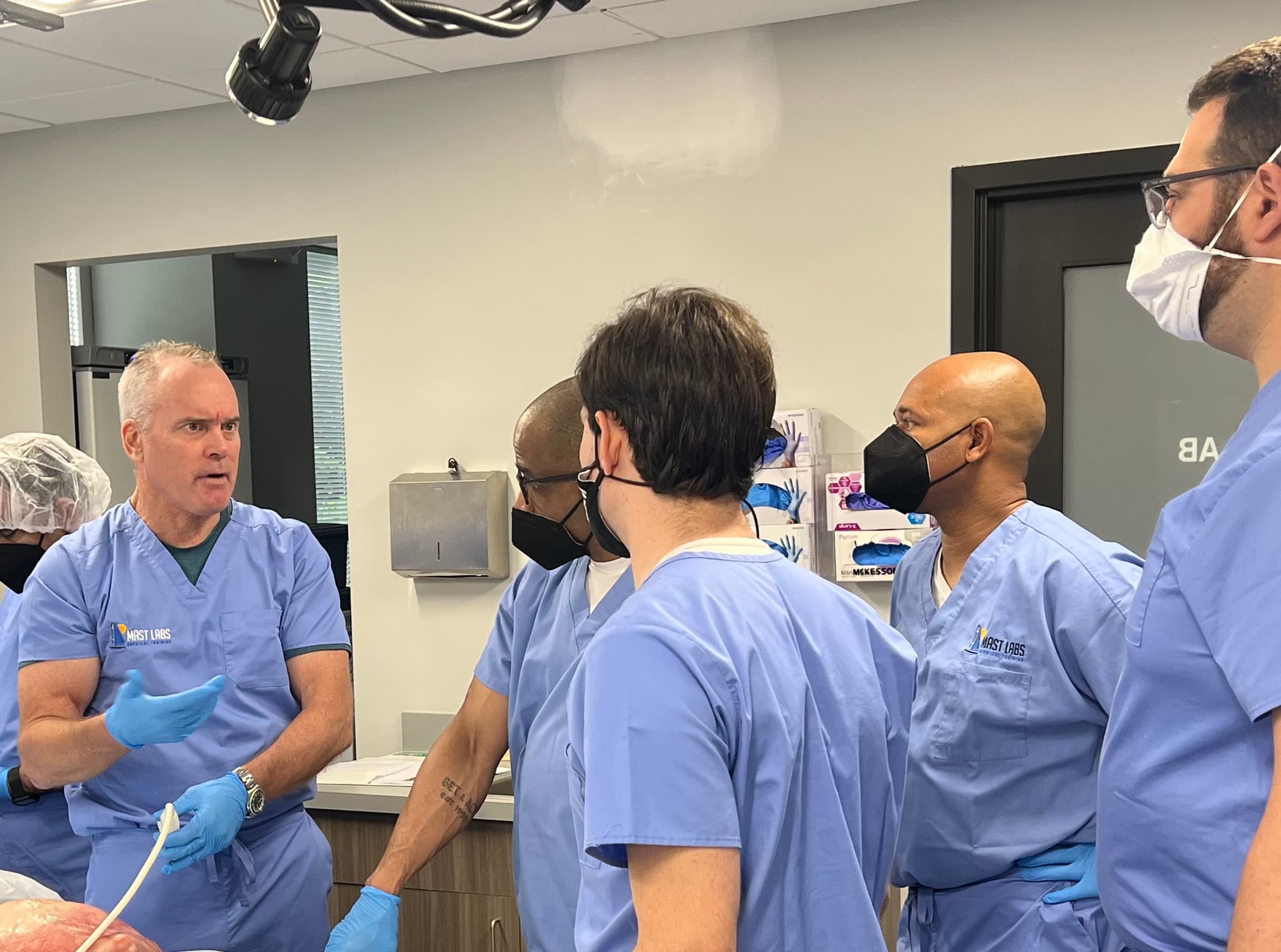
Dr. Mulvaney teaching ultrasound-guided injection technique to physicians.
Beyond nutrition, the way you move, sleep, and manage stress all shape how well your body heals. Dr. Mulvaney has trained physicians nationally and internationally in these ultrasound-guided regenerative techniques — the same evidence-based approach behind the whole-body strategies below.
Optimizing Recovery: Whole-Body Guide
Click Here for Your Optimizing Recovery GuideEvidence-based nutrition, lifestyle, and adjunct strategies for healing after an injury or a procedure.
Avoiding Toxins That Slow Healing
- Tobacco/nicotine — smokers have significantly higher rates of nonunion and surgical-site infection; nicotine constricts blood vessels, reducing oxygen delivery to healing tissue. Quitting even a few weeks before a planned procedure measurably improves outcomes.
- Alcohol — even a single episode of intoxication impairs healing at the cellular level, delaying the inflammatory phase, keratinocyte migration, new blood vessel formation, and collagen deposition. Avoid alcohol immediately before and after a procedure or significant injury, and minimize it throughout active healing. Reducing your exposure to toxins like alcohol has been shown to have far-reaching overall health benefits as well.
- THC/cannabis — although overuse of any substance is generally counterproductive for behavioral health, general health, and healing, moderate use of THC products does not appear to interfere with our results. Heavy cannabis use, however, is associated with lower bone density and higher rates of nonunion/malunion after orthopedic procedures. If cannabis is used for symptom control, discuss route and timing with your surgeon.
Adjunct Physical Modalities
- Red / near-infrared light (photobiomodulation) — reasonably good evidence for wound closure, scar quality, and tendinopathy recovery, particularly combined with exercise.
- Ice vs. heat — ice reliably reduces pain and swelling short term but doesn't speed healing. Use briefly (10 minutes or less) only for pain control as needed in the first 48–72 hours. Heat increases local blood flow and can support healing once acute swelling has passed, and helps with stiffness and range of motion after the first 48–72 hours. Current thinking favors controlled movement over prolonged rest or icing.
- Physical therapy — physical therapy will almost always be part of your ultimate treatment plan, but it is important not to start aggressive physical therapy too early. For most regenerative procedures, physical therapy will usually start at the 4-6-week mark. Talk to Dr. Mulvaney about when you should start physical therapy for your injury.
Movement, Sleep, and Mindset
- Stay appropriately active — early, gentle mobilization (as cleared by your care team) reduces complications and speeds functional recovery compared to prolonged rest. Cross-train around an injury to preserve overall conditioning and mood.
- Sleep — growth hormone release and much of tissue repair happens during sleep; poor sleep measurably delays recovery. Prioritize 7–9 hours, especially in the first 1–2 weeks after injury or surgery.
- Calm mind / stress management — chronic stress measurably slows wound healing; stress hormones suppress inflammatory signaling and immune cell migration to the wound. Brief daily relaxation, breathing exercises, and adequate social support have a measurable, evidence-backed benefit for healing speed.
Returning to Movement
Once you start feeling better, it's important to gradually return to activity. Returning you to movement — not just getting you out of pain — is the whole point of treatment. Movement and exercise are the true foundation of health, and that is our ultimate goal for every patient.

What about peptides and other alternative strategies?
Click HereThese guides are for general education and do not replace individualized medical or nutritional advice. Discuss any new supplement or significant lifestyle change with your physician, especially if you have kidney or liver disease, are on anticoagulant medication, or are pregnant or breastfeeding.